 +91 98193 84820
 girish.gemerik@gmail.com
Good sterile piping design combines hygienic engineering, controlled fabrication, effective cleaning and sterilization, and complete documentation.
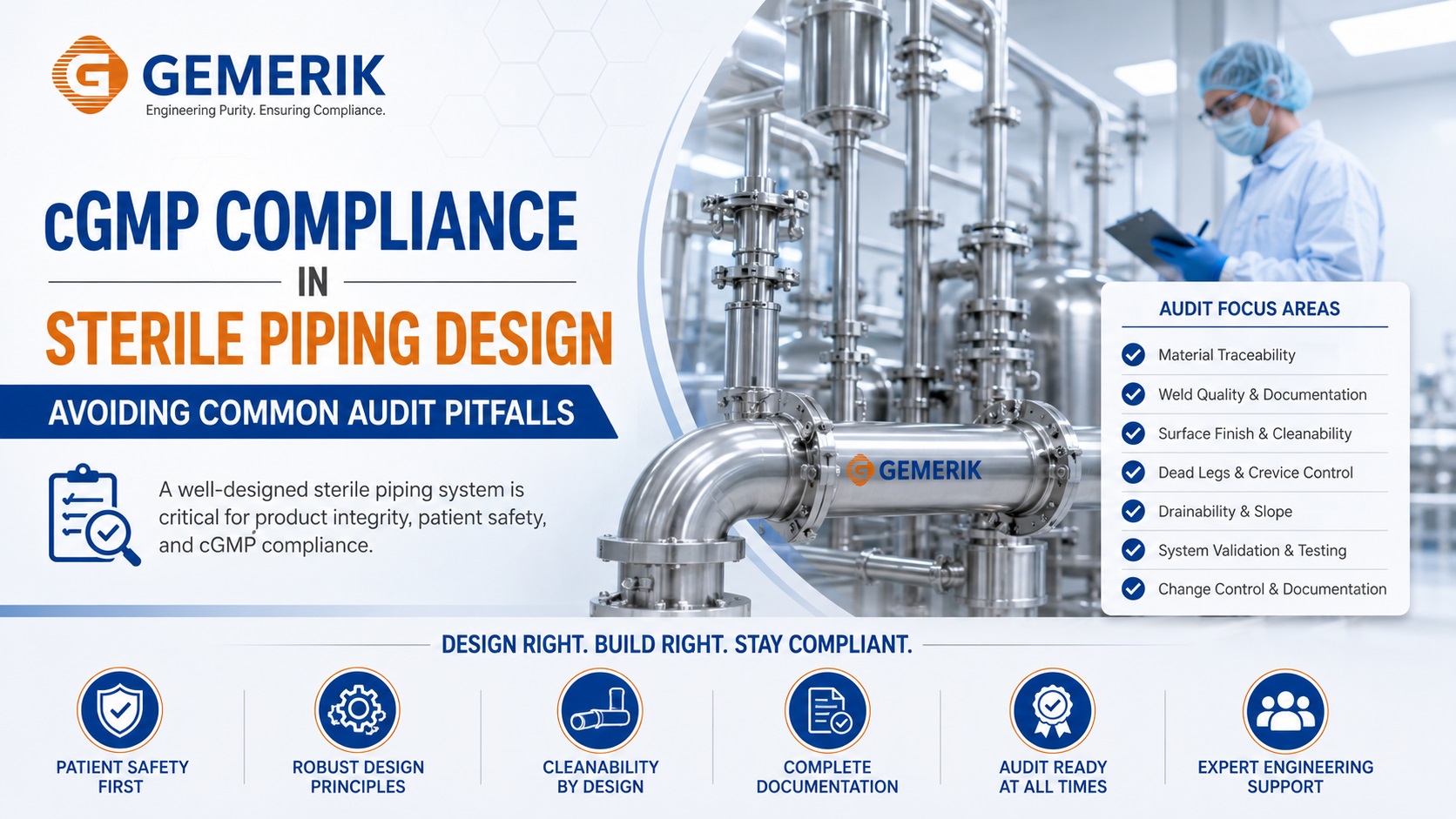
In pharmaceutical manufacturing, sterile piping systems are critical to maintaining product quality, process integrity, and contamination control. A piping system may appear technically sound, yet small design and documentation gaps can create significant concerns during a cGMP audit. Proper hygienic design, drainability, material selection, welding practices, and documentation are therefore essential from the initial engineering stage through qualification and routine operation.
The objective of a compliant sterile piping system is not simply to transport purified water, clean steam, process solutions, or other pharmaceutical fluids. The complete system must be designed so that it can be effectively cleaned, sterilized, drained, inspected, and maintained without creating conditions that could compromise product safety.
1. Poor Drainability and Uncontrolled Low Points
One of the most common sterile piping concerns is inadequate drainability. Horizontal piping should be planned with suitable slopes toward designated drain points, while unnecessary low points and pockets should be avoided. Poorly designed sections can retain water or process residue after cleaning or sterilization and may become difficult to inspect or maintain.
2. Excessive Dead Legs
Branch connections and instrument take-offs should be carefully evaluated to minimize stagnant areas. Excessive dead legs can make cleaning and sterilization less effective and may create locations where contamination can remain. Hygienic point-of-use connections should therefore be designed with the intended process and cleaning strategy in mind.
3. Incorrect Valve and Component Selection
Valves, fittings, sampling points, gauges, and other components must be suitable for the process and the required cleaning and sterilization conditions. Component selection should consider hygienic geometry, cleanability, drainability, material compatibility, operating temperature, pressure, and maintenance requirements.
4. Material and Surface-Finish Gaps
Materials of construction and internal surface finishes should be specified according to the intended service. Inadequate material traceability, damaged surfaces, rough internal areas, or inconsistent finishing can complicate cleaning and increase contamination risks. Material certificates and applicable fabrication records should be retained as part of the project documentation.
5. Welding and Fabrication Documentation
Sterile piping quality depends heavily on fabrication control. Orbital welding, weld identification, inspection records, weld logs, material traceability, and applicable inspection reports should be controlled and maintained. Missing or incomplete fabrication documentation can become a major audit concern even when the installed piping appears satisfactory.
6. Inadequate CIP and SIP Consideration
Cleaning-in-place and steam-in-place requirements should be considered during the piping design stage. The system should provide appropriate flow paths, access, drainage, and sterilization conditions for the intended process. A design that cannot be consistently cleaned, drained, and sterilized may create avoidable qualification and operational challenges.
Common Audit Pitfalls to Check
- Drainability : Verify slopes, low points, drain locations, and complete system emptying.
- Dead Legs : Review branch connections, instrument take-offs, and point-of-use arrangements for stagnant areas.
- Component Selection : Confirm valves, fittings, instruments, and seals are appropriate for hygienic pharmaceutical service.
- Surface Finish : Maintain specified internal surface quality and protect finished surfaces during fabrication and installation.
- Weld Records : Maintain weld maps, weld logs, inspection records, and material traceability.
- CIP / SIP : Confirm the complete piping route supports the defined cleaning and sterilization strategy.
- Documentation : Keep approved drawings, specifications, certificates, inspection reports, qualification records, and change-control documentation available.
Building Audit-Ready Sterile Piping Systems
A robust sterile piping project should consider compliance from design qualification through fabrication, installation, testing, commissioning, and routine maintenance. Engineering drawings should clearly communicate slopes, drain points, valve locations, materials, weld references, and process connections. The final documentation package should demonstrate that the installed system matches the approved design and that the required inspections and qualification activities have been completed.
Conclusion
Avoiding common cGMP audit pitfalls starts with hygienic design and continues through controlled fabrication, installation, qualification, and documentation. By focusing on drainability, dead-leg control, suitable components, surface quality, welding records, CIP/SIP performance, and complete technical documentation, pharmaceutical manufacturers can build sterile piping systems that are easier to clean, maintain, inspect, and qualify.